Vision

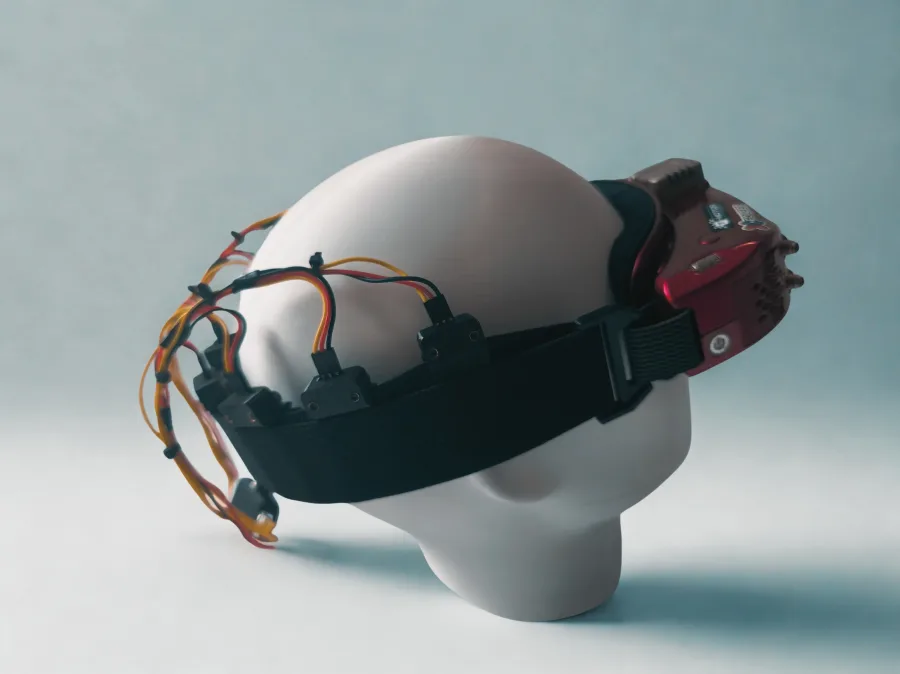
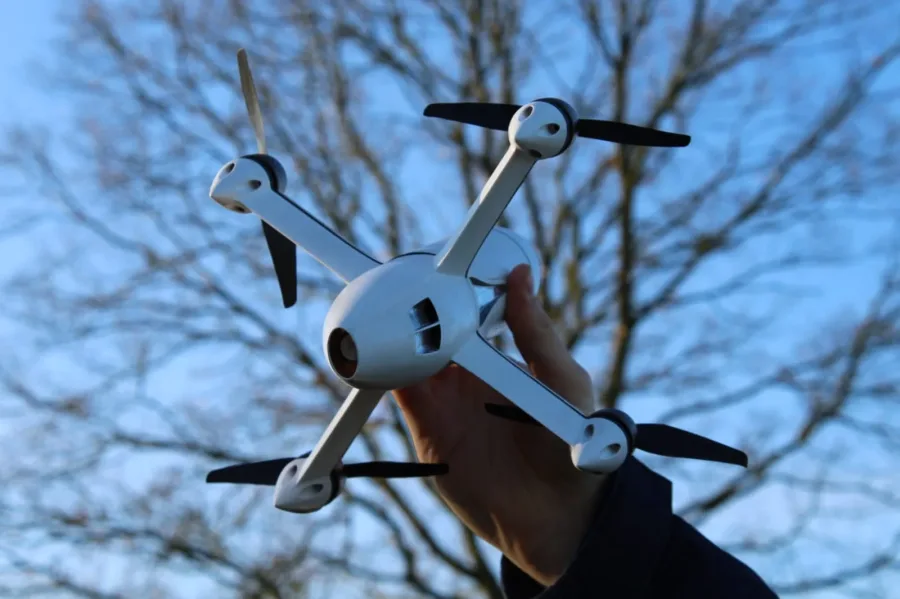
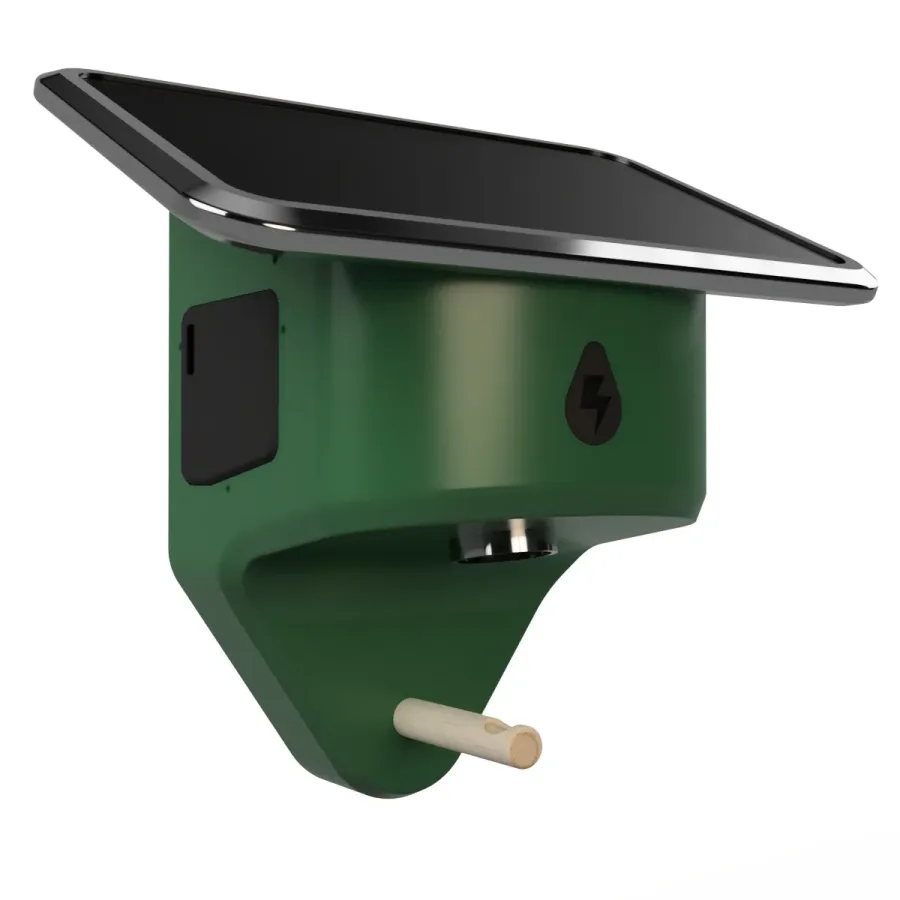
In a world increasingly confronted with the consequences of overconsumption and growing e-waste, it is clear that the products we create must evolve beyond the outdated linear model of take, make, dispose. I believe that products should not be designed for replacement, but for continuity: able to adapt, grow, and remain meaningful to their users over long periods of time. My vision is to design modular, repairable, and intuitive tools that empower users with flexibility, freedom, and a sense of cherishment. Truly usable products, in my view, are those that people can understand at a glance, maintain with confidence, and personalise to fit their evolving needs. By prioritizing modularity, components can be upgraded, swapped, or reconfigured, ensuring that the product can adapt to future technologies without becoming obsolete. I aim to combine technical tools with simple, elegant modular solutions, creating tools that feel both mechanically robust and thoughtfully human. Clear interaction cues, accessible repair pathways, and material choices that invite long-term care all contribute to products that users value and want to keep. A major inspiration for this philosophy comes from mechanical watches. Objects engineered for longevity, designed to be opened and serviced, and cherished across generations. I strive to bring this mindset into modern tools and everyday gadgets: designing products that stand the test of time not only in their function, but also in their personal significance. Ultimately, I want to create tools that users enjoy, trust, and grow alongside. Products that remain relevant through modularity, sustainable by design, and meaningful through everyday use.

Me

(Me)

Professional Identity

I've always seen creativity as a big part of who I am. Growing up with an artist dad and an art teacher mom, I was surrounded by making, experimenting, and thinking visually. My dad's shed became my favorite place where I learned to solve problems by building, fixing, and just trying things out. I often find it easier to show my ideas through making rather than explaining them in words. A major turning point in my life was overcoming cancer at age nine. It made me stronger, more determined, and taught me to keep going until I'm happy with the result. That mindset still drives me today I'm motivated to deliver quality and take pride in doing things well. Sometimes I focus too much on details, but I've learned to plan better and keep an eye on the bigger picture. I've taken on different roles in teams, from building things myself to managing group work. I normally don't like to be a team leader but I'm able to step up as a leader when needed, setting out a plan, dividing tasks, and making sure we all stay on track. My hands-on experience ranges from coding and electronics to welding and product prototyping, and I always try to combine those skills to make useful, long-lasting designs. For me, design isn't just about looks it's about making things that are built to last and really matter to people.

Me playing around with FPV

(Me playing around with FPV)

Past

I’ve never really seen the world the way most people do. Growing up with Asperger’s, I struggled to make eye contact, so my attention naturally went elsewhere, downward, toward the ground, toward objects. I noticed details others often missed: the worn edges of discarded parts, the texture of broken plastic, the quiet waste around us. That way of looking stayed with me and became a key part of how I design. When I was around 9 or 10, I was diagnosed with Hodgkin lymphoma. That time shaped me more than I realized back then. I had to grow up making tests during chemo sessions and the only real break I had was building with LEGO. Reusing the same pieces over and over, combining them in new ways, solving small construction puzzles just to keep going. That hands-on making became therapeutic, and it still is. In high school, I started working with leftover materials, scrap plastics, found parts, giving them a new purpose in my art projects. There was so much potential in what people threw away. Now, when I design, I think in systems. I think about how parts can fit together, come apart, and are adaptable. I don’t believe in single use. My experience taught me that life can be fragile, unpredictable. But the things we make don’t have to be. Products can be built to last. They can hold meaning. They can be passed down, upgraded, and repaired.

Past picture

Present

I'm currently working on the AI-assisted Portable Plasmas project that explores how artificial intelligence and human creativity can co-design. My aim is to make the product sustainable and futureproof: instead of short-lived tech, I want to make something modular, repairable, and long-lasting, something that grows with its user. At the same time, I'm diving deep into physical interaction through the Designing Actuated Systems course. I'm learning how mechanical motion, tactile feedback, and code can come together in responsive systems. This is helping me refine how I think about interaction, not just visually or digitally, but through physical response and movement. Besides these courses I'm currently also focusing on defining a possible internship opportunity at TSG in Eindhoven. www.tsggroup.nl/

Present picture

Future

Internship at TSG Eindhoven During my internship at TSG Eindhoven, I aim to deepen my understanding of the full design-to-production cycle within a professional industrial design context, with a strong focus on sustainability. I want to become more confident in applying technical knowledge to real-world challenges by working on projects where I can take initiative, contribute independently, and receive constructive feedback. I plan to sharpen my ability to make well-founded design decisions, clearly communicate technical and economic reasoning. By analyzing previous case studies and participating in ongoing projects, I will translate user needs into practical, sustainable design solutions, while also reflecting on how to improve the process itself. I’m particularly interested in gaining insight into TSG’s structured workflow and contributing ideas that support their vision of user-centered, sustainable innovation. Through this experience, I aim to grow into a more process-aware, critical-thinking designer who can confidently operate within an professional product development environment. www.tsggroup.nl/

Future picture

Expertise Areas

Expertise areas are key themes that help guide your learning and growth as a designer. They give you different ways to look at design like focusing on creativity, technology, people, business, or data. By working with these areas, you build a strong mix of skills and knowledge. This helps you understand complex problems and come up with smart, useful and innovative designs. With my mix of expertise Areas makes me very hands-on during the design process, and thanks to my technical skills, I can work well in a team to explore and combine ideas in creative ways. This helps me tackle complicated situations and come up with effective design solutions.

Creativity and Aesthetics

Technology and Realization

User and Society

Business and Entrepreneurship

Math, Data and Computing

Technology and Realization

I excel at quickly developing technical solutions in projects. When I can visualize an idea, I work relentlessly to bring it to life, testing and improving iteratively to make it work. I have been building and prototyping in my dad’s shed since the day I was allowed to use a hammer. This hands-on experience has made prototyping feel natural and even therapeutic for me. Over the years, I have developed skills in 3D modeling (Fusion360), CNC machining, 3D printing, MIG welding, soldering, and laser engraving. Additionally, I have a strong foundation in coding, ranging from building websites in PHP to working with facial recognition in Python and C++. These practical hard skills allow me to turn ambitious ideas into reality, even when they seem far-fetched at first. Like the ‘Rewinder’ project where I made a compact spring-based battery for electric devices. Having the ability to quickly prototype, test, and refine ensures that my designs are not just concepts but tangible, functional solutions.

Me using the CNC on carbon fiber board

(Me using the CNC on carbon fiber board)

Creativity and Aesthetics

I see design as more than just making things look good, it’s about how it feels and how you experience them. Every product, interface, or interaction should be intuitive and engaging, guiding the user naturally through form and texture. My design philosophy revolves around minimalism and modularity, ensuring that products are intuitive, repairable, and sustainable. I strive to create designs where function and aesthetics work together seamlessly, making the purpose of an object clear at first glance. Growing up with a father who is a sculptor, materials, tactile and sensory design has always been part of my process. I experiment with materials, 3D-printed textures, and hands-on prototyping to explore how touch and form influence usability. In project ‘Emit’ I worked from the shapes and looks of stones and erosion to create a more familiar look for the caveman we designed for. In group projects, my sketching and prototyping skills play a crucial role in communicating and refining ideas. I believe that being able to visualize concepts is one of the most important tools in design. It bridges the gap between abstract thoughts and tangible solutions.

Work on 'EMIT' project

(Work on 'EMIT' project)

User & Society

Design is always connected to the people who use it and the world it exists in. I believe that good design comes from understanding human behavior, social contexts, and the user’s needs. I focus on creating products that are intuitive and functional, considering both the physical and emotional interactions users have with them. My goal is to design experiences that feel natural and responsive to the needs of the user. Sustainability is at the core of my approach. I prioritize repairability, modularity, and longevity, ensuring that products serve users today and remain relevant and functional in the long run. Over the years, I’ve acquired valuable user testing techniques such as in-the-wild testing, questionnaires, structured/semi-structured interviews, affinity diagramming, and making personas. These skills became helpful especially when working on the ‘Rewinder’ project, making a modular toolless repairable multitool. Thinking of storage spaces and key placements. One important thing I have learned through testing is that some people preferred to have the winding key pre-attached instead of loose. Also, when working on ‘Emit’, successfully making an extreme character designing for these extreme characteristics made the project special. Combined with my prototyping skills, these methods help me gather valuable feedback and iterate effectively. This approach enables me to refine designs and explore new solutions based on real user experiences.

Partly assembled 'Rewinder'

(Partly assembled 'Rewinder')

Business & Entrepreneurship

I approach entrepreneurship as a way to create products that are valued, used, and produced in a sustainable way. My interest in business began in my first year, when I chose Introduction to Business Design as an elective. That course introduced me to a wide range of business trends and strategic shifts, sparking a deeper curiosity in how design and entrepreneurship intersect. Later, I expanded this knowledge through the course Design Innovation Methods, where I explored various business strategies in more depth. Over time, I’ve gained practical experience using business design frameworks such as the Business Model Canvas and PESTEL analysis, and learned to link user-centered tools, like affinity diagramming from the User & Society expertise area to broader strategic thinking. These skills help me add value to the products I design and open up new opportunities by evaluating the values they offer. Looking ahead, I want to deepen my knowledge in business and entrepreneurship by exploring the bridge between technology and realization specifically, understanding the costs and processes involved in making and bringing products to market.

Service Blueprint - Design Innovation Methods

(Service Blueprint - Design Innovation Methods)

Math, Data and Computing

My foundation in Math, Data & Computing allows me to bring precision, logic, and technical depth into my design work. I enjoy using data to guide decisions, build models, and prototype interactions. Especially when these go beyond the screen and into the physical world. Courses like Creative Programming, Making Sense of Sensors, and Foundations of Data Analytics have given me the programming skills to analyze data and bring products to life, such as in project 2: OWL-E. These experiences helped me understand how computational thinking and data interpretation can directly influence user interaction and system behavior. Currently, I’m taking Design Actuated Experiences, where I explore mechanical systems through gears, torque, and motion. I’ve been calculating speed, strength, and mechanical efficiency to inform design decisions. My technical foundation helped me get started, but this course made me realize how much more there is to learn especially when it comes to testing mechanical motions and integrating meaningful feedback into movement. Combining digital logic with physical prototyping has helped me design systems that are both technically robust and intuitively interactive. I aim to further explore how computation and mechanics can be used together to create richer, embodied user experiences.

Bezel wound clock - Design Actuated Systems

(Bezel wound clock - Design Actuated Systems)

Reflection on Projects

Across various design projects, I’ve developed a more practical, user-focused, and sustainable design approach. My work often starts with quick sketches or models, something I noticed was useful early on in Project 1, where visualizing a concept like a projecting pawn helped get the team aligned and moving. Over time, I’ve learned to better balance this initiative with giving others space to contribute. I’ve frequently taken on hands-on and organizational roles, especially in Project 2 and Project 3, handling 3D modeling, prototyping, and sometimes stepping in when deadlines were tight. In CBL3, I stayed up late fixing last-minute electronics to prepare for demo day, but also learned that I need to set clearer boundaries and distribute tasks earlier to avoid carrying too much alone. Open conversations with the team helped improve this over time. This is also something I’m applying now in my current multidisciplinary project about AI-assisted Portable Plasmas, using a clearer team structure with roles like board writer, chairman, and minutes taker to keep things organized and balanced. My interest in mechanical solutions has grown, especially when they support more sustainable outcomes. In CBL3, I explored mechanical systems instead of battery-powered ones, which aligned with my long-term goal of reducing reliance on disposable electronics. I’ve also started experimenting with CNC machining to move toward more durable, metal-based designs. Alongside that, I’ve been building up my user research skills. In Project 2, I ran interviews and observations. I saw how small inconsistencies, like who got context beforehand impacted feedback. I’ve started using clearer storyboards and more consistent testing setups to improve how I gather insights. Technically, I’ve become more confident with tools like Fusion 360, PCB soldering, and planning efficient prints using mechanical design principles, something I applied across Creative Electronics, Creative Mechanical Engineering, and the Owl-E project. Overall, my approach to design has become more iterative, functional, and systems-oriented. I care about how things work, how they’re used, and how long they last.